
Discover Malawi
Trade & Investment
Malawi is a peaceful, open economy at the meeting point of eastern and southern Africa, with fertile land, largely untapped mineral resources, a young English-speaking workforce and preferential access to regional and international markets.
Malawi and Mauritius are both members of the Southern African Development Community (SADC) and the Common Market for Eastern and Southern Africa (COMESA). The Consulate General is the first point of contact in Mauritius for investors, traders and business associations who wish to explore what Malawi has to offer.
Why Invest in Malawi
Peace and stability
Malawi has no history of civil war and has held regular multi-party elections since 1994 — a secure and predictable setting for long-term business.
One-stop service for investors
The Malawi Investment and Trade Centre (MITC) coordinates registration, licences, permits and approvals through its One Stop Service Centre.
An open economy
Foreign investment is welcome in every sector. The legal system, based on English common law, protects investments regardless of ownership.
A young workforce
A youthful, trainable and English-speaking labour force is available at competitive cost.
Preferential market access
Goods made in Malawi reach the SADC and COMESA free trade areas, the wider African market under the AfCFTA, and the European Union and other markets on preferential terms.
Investment incentives
The Investment and Export Promotion Act of 2024 provides a package of fiscal and non-fiscal incentives for priority industries and exporters.
Untapped opportunities
Agriculture, agro-processing, mining, energy, tourism, manufacturing, infrastructure and ICT all offer room for new projects and partnerships.
Regional connections
Road and rail corridors link Malawi to the ports of Nacala and Beira in Mozambique and Durban in South Africa; international airports serve Lilongwe and Blantyre.
A clear national vision
Malawi 2063 sets the long-term direction: commercial agriculture, industrialisation and urbanisation, driven by the private sector.
Overview
The Economy at a Glance
Malawi has a market of about 22.2 million people and a gross domestic product of roughly US$14.9 billion (World Bank, 2025, current US dollars). The currency is the Malawian kwacha (MWK); monetary policy and exchange control are the responsibility of the Reserve Bank of Malawi.
Agriculture is the backbone of the economy. According to the World Bank it employs more than 80 per cent of the population, on smallholdings as well as on commercial estates growing tobacco, tea, sugar, macadamia and other crops. Manufacturing is dominated by agro-processing; services, mining and tourism are growing in importance.
The Malawi Investment and Trade Centre reports merchandise exports of about US$1.13 billion and imports of about US$3.11 billion for 2023. Narrowing that gap — by adding value at home, diversifying exports and attracting investment — is at the centre of government policy.
Growth has been modest in recent years: the World Bank estimates real growth of 1.9 per cent for 2025. That is exactly why Malawi is looking for partners who bring capital, technology and access to markets, and why the Government has renewed its investment law and incentives.
Malawi 2063
Malawi 2063 is the national vision of “an inclusively wealthy and self-reliant nation”. It aims to make Malawi an industrialised upper-middle-income country by 2063 and is being implemented through ten-year plans, the first of which runs from 2021 to 2030. The vision rests on three pillars, supported by seven enablers that include private-sector dynamism, economic infrastructure, human capital development and effective governance.
Agricultural productivity and commercialisation
From subsistence farming to a productive, commercial agriculture that feeds the nation and supplies industry and export markets.
Industrialisation
Processing agricultural produce and minerals in Malawi, building manufacturing and creating skilled jobs.
Urbanisation
Well-planned cities and secondary towns, with tourism and services as engines of growth.
Priority Sectors
The Government of Malawi invites investment in every sector of the economy. Its promotion efforts concentrate on the following areas.
Agriculture & Agro-Processing
Irrigated and large-scale farming, livestock and dairy, aquaculture, horticulture, oilseeds, sugar and cotton — and the processing of these crops into finished products such as edible oils, fruit juices, textiles and leather.
Tourism
Eco-lodges, lakeshore resorts, hotels and conference centres, water sports and lake cruises, and the development of wildlife reserves. Priority projects are set out in the Malawi Tourism Investment Masterplan.
Mining
Largely unexploited deposits include rare earths, graphite, rutile and other heavy mineral sands, uranium, bauxite, coal, limestone, phosphate, gemstones and gold. Details of occurrences are available from the ministry responsible for mining.
Energy
Most electricity comes from hydropower stations along the Shire River. Independent power producers are invited to invest in hydro, solar, wind and biomass generation, and in transmission and distribution.
Manufacturing
Textiles and garments, packaging, leather goods, building materials, and light engineering and electrical products that Malawi currently imports.
Infrastructure
Road, rail, air and inland water transport, water supply and housing — many of them offered as public-private partnerships.
ICT & Financial Services
Digital infrastructure and online services, financial services, and transport and logistics are named among the priority sectors of the 2024 investment law.
Malawi at Work

Main Exports
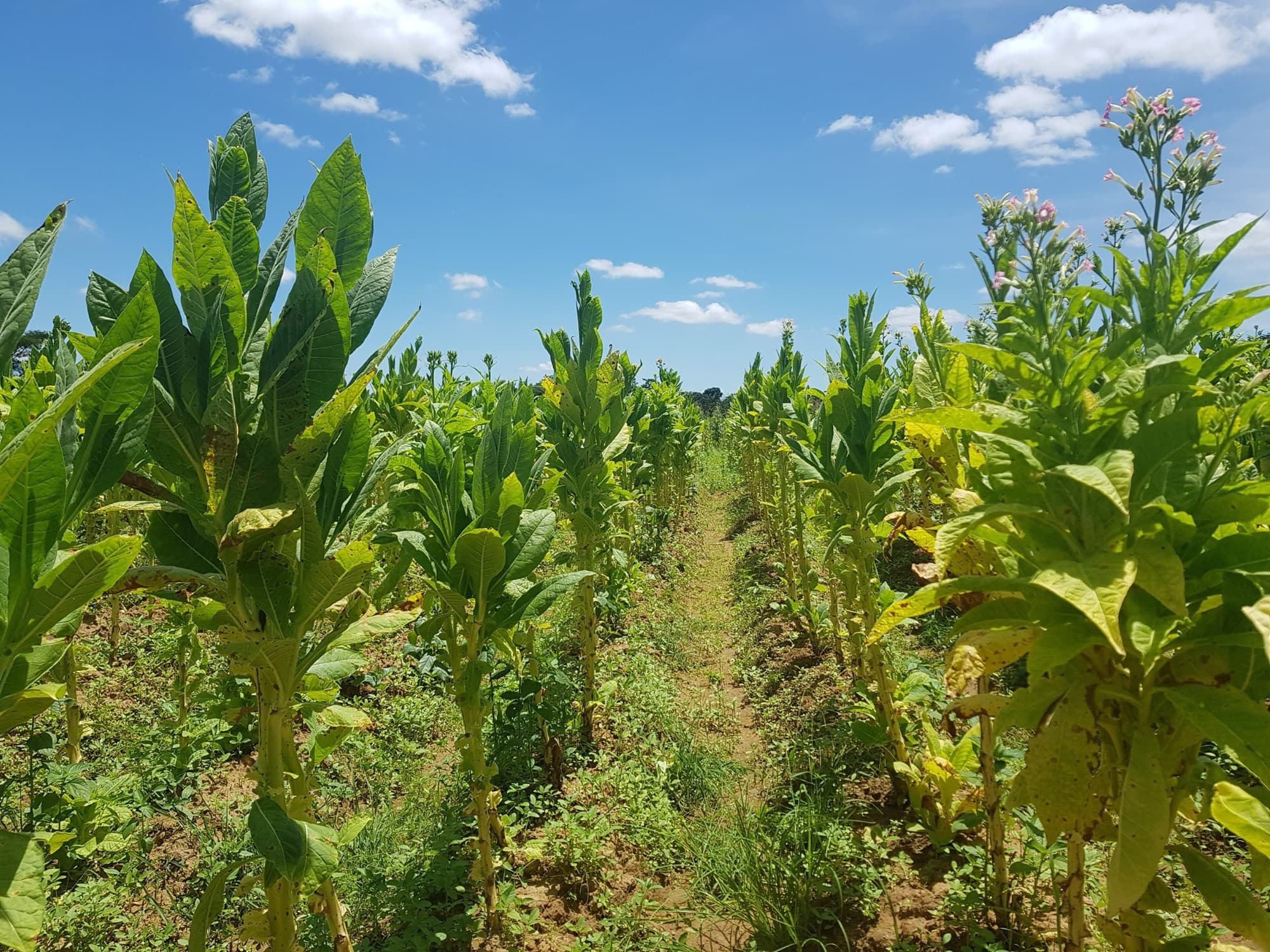
Agricultural products traditionally earn most of Malawi's export income; tobacco remains the largest single export. MITC helps buyers abroad to find Malawian suppliers.
Tobacco
Burley and flue-cured leaf — the leading export crop.
Tea
Grown on the estates of Thyolo and Mulanje in the Shire Highlands since colonial times.
Sugar
Cane sugar and related products such as ethanol.
Nuts
Macadamia nuts and groundnuts.
Pulses and oilseeds
Soya beans, pigeon peas and other pulses, sunflower.
Other products
Cotton, coffee, rice, chillies and paprika, rubber, timber, textiles and handicrafts.
How to Invest
The Malawi Investment and Trade Centre (MITC) is the government agency that guides investors through every step. The fees and processing times below are those published by MITC in its Investment Guide of 2026; please confirm current amounts with MITC before you apply.
Step 1
Contact MITC
Discuss your project with the One Stop Service Centre at MITC, which brings the relevant authorities together under one roof. The Consulate General can make the introduction.
Step 2
Register a company
Incorporate a local company or register a branch of your existing company with the Companies, Registrations and Intellectual Property Centre (CRIPC), which took over the functions of the Registrar General's Department on 1 April 2026. Registration is online; MITC gives a processing time of five working days. Documents of a foreign company must be notarised in the country of origin and be in English.
Step 3
Apply for an Investment Certificate
Submit the application online to MITC with the application form, a business plan or feasibility study, the certificate of incorporation, the memorandum and articles of association and the shareholders' passports. For foreign investors the application fee is US$200 and the issuance fee, payable on approval, is US$800. The minimum capital required varies by sector. MITC states a processing time of five to ten working days.
Step 4
Obtain permits
Applications for a Business Residence Permit and for Temporary Employment Permits for key staff are lodged through MITC and decided by the Department of Immigration and Citizenship Services. MITC gives a processing time of five working days.
Step 5
Register for tax and register your capital
Register with the Malawi Revenue Authority, and register foreign direct investment and external loans with the Reserve Bank of Malawi through your commercial bank. This registration secures the repatriation of dividends, profits, loan repayments and capital.
Step 6
Start operations
With the certificate in hand, MITC assists with land, utilities, construction permits and sector licences, and remains your contact for aftercare.
Incentives for Investors
Incentives are granted under the investment and tax laws and administered by MITC and the Malawi Revenue Authority. Conditions and thresholds apply; the summary below follows the MITC Investment Guide of 2026.
Priority industry status
Qualifying projects, for example in agro-processing and electricity generation, may be granted a corporate income tax rate of 0 per cent for up to ten years, or a reduced rate of 15 per cent.
Export incentives
Registered exporters of non-traditional products benefit from an export allowance and an international transport allowance, and exports are zero-rated for VAT.
Duty and VAT relief
Approved businesses may import machinery, equipment and raw materials free of duty, with VAT exemption on qualifying capital goods.
Capital allowances
Initial, investment and annual allowances reduce the taxable income of investing companies.
Facilitation
Holders of an Investment Certificate receive support with immigration permits, land, utilities and business linkages with local suppliers.
Repatriation
Investments registered with the Reserve Bank of Malawi may repatriate dividends, profits and capital.
Market Access
Producing in Malawi opens the door to markets far larger than the country itself. Rules of origin and other conditions apply under each arrangement.
SADC
Malawi and Mauritius both take part in the free trade area of the Southern African Development Community.
COMESA
Both countries are also members of the free trade area of the Common Market for Eastern and Southern Africa.
AfCFTA
Malawi is a State Party to the African Continental Free Trade Area, which is building a single African market.
European Union
As a least developed country, Malawi exports to the EU duty-free and quota-free under the “Everything But Arms” arrangement.
United States
Malawi is a beneficiary of the African Growth and Opportunity Act (AGOA), which is currently authorised until 31 December 2026.
Other preferences
Preferential schemes for least developed countries are also offered by China, India, Japan and other trading partners.
For Mauritian Businesses
Whether you are a Mauritian company looking for a base on the African mainland, an investor, a buyer of agricultural produce or a tour operator, the Consulate General will be glad to assist.
Information
General information on the business environment, priority sectors and the relevant authorities in Malawi.
Introductions
Putting you in touch with the Malawi Investment and Trade Centre, the responsible ministries and the Malawi Confederation of Chambers of Commerce and Industry.
Sourcing from Malawi
Forwarding enquiries from Mauritian buyers to MITC, which connects them with Malawian exporters.
Missions and events
Supporting business delegations, trade missions and participation in fairs and investment forums in both countries.
Official Resources
- Malawi Investment and Trade Centre (MITC)The central point of contact for foreign direct investment and export promotion, with the One Stop Service Centre.
- MITC SmartConnectOnline platform presenting investment opportunities and projects.
- Government of MalawiOfficial portal with the directory of ministries, including the Ministry of Industrialisation, Business, Trade and Tourism.
- Companies, Registrations and Intellectual Property CentreCompany and business registration — formerly the Registrar General's Department.
- Malawi Revenue Authority (MRA)Customs and import duties, tax rates and the application of trade agreements such as SADC and COMESA.
- Reserve Bank of MalawiCentral bank: exchange control and registration of foreign capital.
- Malawi Confederation of Chambers of Commerce and IndustryThe voice of the private sector in Malawi.
- National Planning CommissionMalawi 2063 and its ten-year implementation plan.
- Public Private Partnership CommissionInfrastructure projects offered as public-private partnerships.
Talk to us about your project
Tell the Consulate General what you have in mind — we will point you to the right authority in Malawi and help to arrange the first contact.